
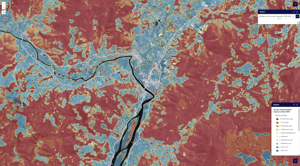
The Huon Valley Council has become the newest partner in the Greater Hobart Bushfire Exposure Index 2025, expanding the map southward and strengthening regional bushfire preparedness across Southern Tasmania.
The Index now includes 2,096 km² of Huon Valley (excluding national parks) and provides building-level exposure insights for 22,000 additional properties, helping residents and decision-makers better understand the potential impact of bushfire if surrounding bushland were to burn.
The Huon Valley Council requested to be included in the Index as part of its ongoing commitment to community safety, evidence-based planning, and regional collaboration.
Developed by Tasmanian climate-tech company Geoneon, the Exposure Index combines vegetation structure, terrain, climate, and built-environment information to estimate the relative exposure of each building. The interactive map is free and open to the public.
Why Huon Valley has been added
- Residents can now check risk around their home
The Index provides simple, visual insights that help households understand their exposure and support conversations about preparedness. - Supports council planning and long-term bushfire mitigation
The data helps identify priority areas for fuel management, infrastructure planning, and community engagement. - Strengthens regional consistency across Greater Hobart
All southern councils now share a unified framework for assessing exposure, supporting joined-up planning across boundaries. - Provides emergency services and planners with actionable insights
The Index is a decision-ready evidence base designed for mitigation, preparedness, and strategic planning — not real-time fire prediction.
About the Index
The Greater Hobart Bushfire Exposure Index 2025 is an annually updated evidence base that:
- Combines vegetation, terrain, climate, and building data
- Uses AI-assisted vegetation modelling to estimate exposure
- Provides suburb- and street-scale insights
- Supports preparedness, mitigation, and strategic planning
- Is freely available to the public
You can now explore the updated map here: https://hobart.geoneon.com