

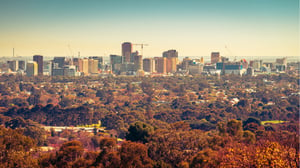
As climate change intensifies, extreme heat is becoming one of the most urgent risks facing Australian cities.
Heatwaves affect public health, infrastructure, energy demand, urban liveability, and the safety of vulnerable communities. But for governments and planners, one of the hardest questions is also one of the most practical:
-
Where is heat accumulating,
-
who is most exposed,
-
and where should action be prioritised?
The Smart Sat CRC Research
A recent Adelaide-based project led by SmartSat CRC, in collaboration with Flinders University, Green Adelaide, and the South Australian Department for Environment and Water, is helping advance how cities answer that question.
The Heatwaves: Kanyini Waru project explored how satellite data can be used to map land surface temperature during heatwave conditions. While air temperature tells us what is happening in the atmosphere, land surface temperature reveals how heat behaves across the built and natural environment.
Roads, roofs, car parks, dry ground, parks, reservoirs, mangroves, and tree-lined streets can all absorb and release heat differently. That variation matters because people do not experience heat evenly across a city.
In one Adelaide field campaign, the project team recorded ground surface temperatures above 70°C. Measurements like this show why urban heat cannot be understood through weather station data alone.
To plan effectively, cities need a more detailed picture of how heat is distributed across neighbourhoods, infrastructure, and landscapes.
A valuable contribution to climate resilience
The Adelaide project is an important contribution because it tackles one of the practical challenges of climate adaptation: how to turn Earth observation capability into useful, reliable evidence for cities.
Satellite-based thermal monitoring is developing quickly, but it is not simple. Different satellite sources offer different trade-offs in spatial resolution, revisit frequency, coverage, timing, calibration, and cost. Some datasets provide long-term consistency. Others offer sharper detail or the possibility of more frequent monitoring. No single source answers every planning question on its own. That is why research like this matters.
By testing satellite data against field measurements and real urban conditions, projects like Heatwaves: Kanyini Waru help build confidence in what the technology can do, where its limits are, and how it can be applied responsibly.
This kind of work is essential if satellite-derived heat information is to become part of everyday climate resilience planning.
From heat observation to action
For councils and government agencies, the goal is not simply to produce better heat maps. The real value comes when heat data helps answer planning questions, such as:
-
Which neighbourhoods are consistently hotter?
-
Where are people, buildings, and public spaces most exposed?
-
Where is tree canopy missing?
-
Where could urban greening, shade, cool materials, or other interventions make the greatest difference?
-
How can limited budgets be targeted in a way that is evidence-based and easy to communicate?
This is the shift now taking place across the Earth observation and climate intelligence sector. Satellite data is becoming more available, more detailed, and more relevant to urban decision-making. But the next step is translation.
Geoneon's role in the same mission
This is closely aligned with the work Geoneon is doing in urban heat and climate risk.
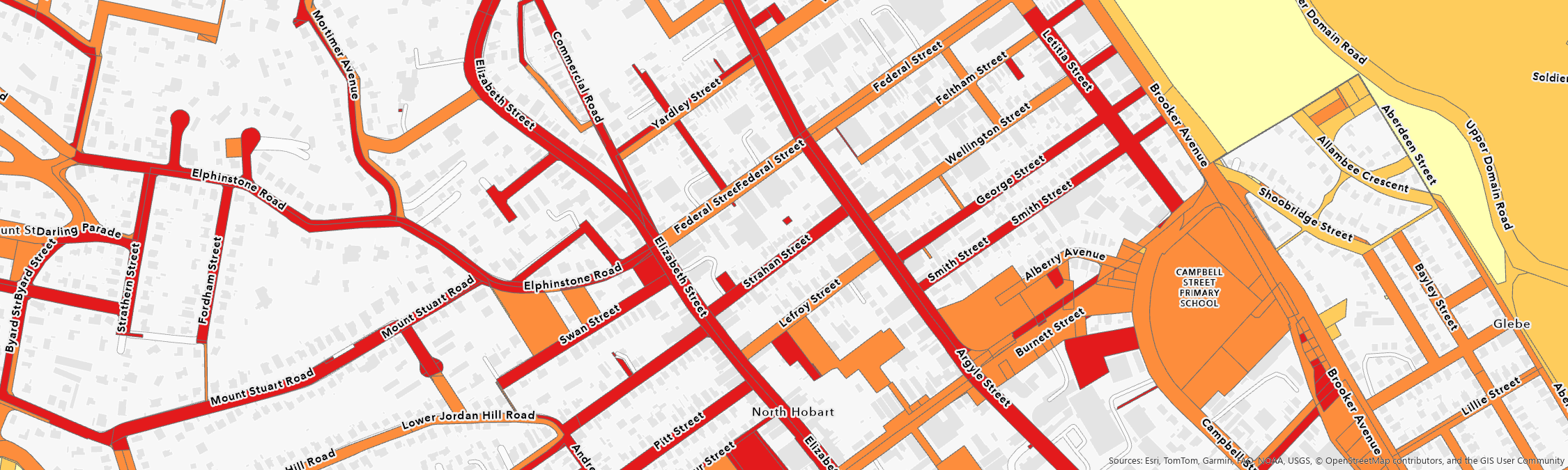
We use satellite data, AI, geospatial analysis, building-level exposure data, tree canopy information, and social vulnerability indicators to help governments understand where heat risk is concentrated and where action can have the greatest impact. The aim is to move beyond simply identifying hot areas.
A hot surface is important, but it is only part of the story. For planning purposes, heat needs to be understood alongside the people, buildings, infrastructure, and urban conditions that shape exposure and vulnerability.
That is why Geoneon’s heat work focuses on decision-ready outputs: maps, indices, reports, and spatial layers that help councils and agencies prioritise urban greening, cooling strategies, and resilience investment.
This is especially important as climate change increases pressure on local governments. Councils are being asked to act earlier, justify investment more clearly, and communicate risk to communities in practical terms. Good data is critical. But it is only useful if it is translated into intelligence that supports real decisions.
A shared direction in the sector
The work being done by SmartSat CRC, Flinders University, Green Adelaide, and the South Australian Department for Environment and Water is a strong example of the kind of collaboration needed as Australia prepares for a hotter climate.
It brings together satellite capability, scientific expertise, field validation, environmental management, and public-sector needs. That combination matters. Climate adaptation cannot be solved by data alone. It will require partnerships that connect research, technology, government, and communities. Because in a hotter future, the value of climate data will be measured not just by what it shows, but by what it helps governments do.
For Geoneon, this is the broader mission: to help turn Earth observation and climate data into clear, practical intelligence for the people responsible for protecting communities, infrastructure, and natural environments.