

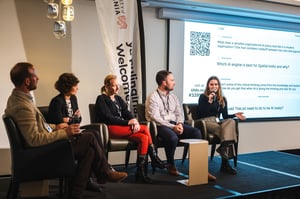
Tasmania’s spatial community came together for State of GIS 2026, a volunteer-led event that brought more than 150 people into the room and showed the strength of the state’s geospatial sector.
AI, analytics and the next phase of spatial capability
This year’s theme, “Island to Insight: AI, Analytics and the Digital Landscape,” reflected many of the conversations shaping the industry right now: how spatial data infrastructure is evolving, how AI is changing geospatial workflows, and how location intelligence is being applied across government, business, and community decision-making.
Geoneon CEO Roxane Bandini-Maeder attended the conference, presented, and took part in panel discussions on the future of geospatial capability. Across the program, sessions highlighted both the foundations and the frontiers of the sector, from updates on ListMap and the Common Operating Picture to practical examples of spatial analytics in business, AI-assisted QGIS scripting, subsurface mapping, vision models, and emerging development approaches.
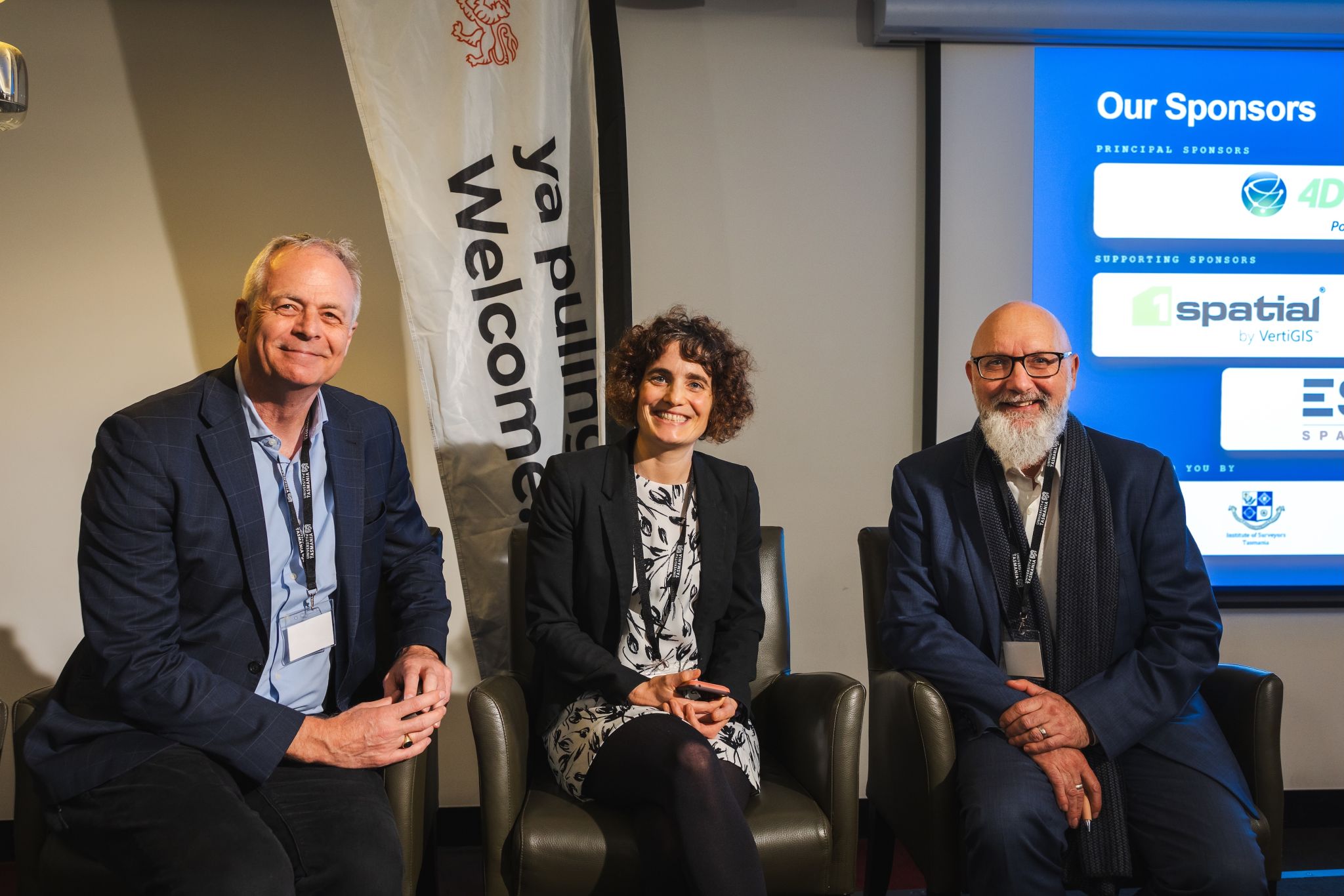
Fig 1: TASSIC chair Maurits van der Vlugt GAICD and TasICT CEO Russell Kelly with TasICT member Roxane Bandini-Maeder, founder and CEO of Geoneon
The announcement that TASSIC has joined TasICT also marked an important moment for the sector, bringing Tasmania’s spatial and ICT communities into closer alignment. It reflects a broader shift we are seeing across the industry: spatial data is no longer a specialist layer that sits apart from digital transformation. It is part of the infrastructure that supports better planning, stronger services, and more resilient communities.
For Geoneon, the event was a valuable opportunity to connect with Tasmania’s spatial community and contribute to conversations about the future of geospatial intelligence, AI, and applied analytics. The energy in the room made it clear that the sector is not only adapting to change, but actively shaping what comes next.